
Generating property enquiries is just the beginning of real estate sales. The real challenge is converting those enquiries into genuine buyer interest and confirmed site visits.
An effective real estate lead follow-up process helps agents connect with potential buyers, understand their requirements, build trust, and guide them towards visiting a property.
In Kerala’s competitive property market, buyers often explore multiple apartments, villas, or plots before making a decision. Without proper follow-up, even promising enquiries can be missed.
So, how can real estate agents turn enquiries into successful site visits? Let’s look at the essential steps.
Why Is Lead Follow-Up Important in Real Estate?
Not every person who enquires about a property is ready to buy immediately. Some buyers are actively searching, while others are comparing prices, locations, and property features.
For example, someone looking for an apartment in Kochi might contact several property agents. An agent who responds promptly and provides relevant information can make the buyer’s search easier.
A proper follow-up process helps real estate professionals:
- Respond to enquiries without unnecessary delays.
- Identify genuinely interested buyers.
- Understand property requirements and budgets.
- Build trust through consistent communication.
- Schedule site visits more effectively.
The goal is not to make more calls. It is to make every conversation useful.
Real Estate Lead Follow-Up Process
1. Respond Quickly to New Enquiries
The first response creates the buyer’s initial impression of the agent.
When someone enquires through a property portal, website, or advertisement, the assigned agent should respond promptly during suitable working hours.
A simple opening works well:
“Hello, this is Rahul from the property sales team. You recently enquired about an apartment in Kakkanad. Is this a convenient time to discuss your requirements?”
Avoid starting with a lengthy sales pitch. First, make sure the buyer is available and comfortable continuing the conversation.
If the buyer is busy, ask for a suitable callback time.
2. Understand the Buyer’s Requirements
Before suggesting a property, understand what the buyer is looking for.
Ask a few essential questions:
- Which location do you prefer?
- Are you looking for an apartment, villa, house, or plot?
- What is your approximate budget?
- When are you planning to purchase?
These questions help agents identify suitable properties and avoid irrelevant suggestions.
For example, a buyer searching for a 3 BHK apartment near Infopark in Kochi may prioritise commuting convenience, parking, and nearby facilities.
Understanding these needs makes the next follow-up more relevant.
3. Share Suitable Property Details
Once the buyer’s requirements are clear, recommend properties that match their expectations.
Share important information such as location, price, floor plans, property features, availability, and relevant approval details.
Instead of sending several unrelated listings, focus on one or two suitable options.
WhatsApp can be helpful for sharing brochures, property photos, and location pins when the buyer has agreed to receive them.
Accurate information is essential. For applicable projects, agents can verify registration details through Kerala RERA’s official project database.
4. Convert Interest Into a Site Visit
Once a buyer shows genuine interest, suggest a convenient viewing time.
Instead of repeatedly asking, “Are you interested in visiting?”, offer a specific choice.
For example:
“Based on your budget and preferred location, this apartment seems suitable. Would Saturday morning or Sunday afternoon work better for a visit?”
This helps move the conversation towards an appointment without unnecessary pressure.
For buyers living outside Kerala, a virtual walkthrough may help them shortlist properties before arranging a physical visit.
5. Confirm the Visit and Follow Up
Once the buyer agrees to visit, confirm the date, time, property location, and meeting arrangements.
Send a short reminder before the appointment if the buyer has agreed to receive one.
After the visit, ask whether the property met their expectations and whether they need more information.
This final conversation helps agents understand the buyer’s interest and decide on the next step.
For example, someone looking for an apartment in Kochi might contact several property agents. An agent who responds promptly and provides relevant information can make the buyer’s search easier.
A proper follow-up process helps real estate professionals:
- Respond to enquiries without unnecessary delays.
- Identify genuinely interested buyers.
- Understand property requirements and budgets.
- Build trust through consistent communication.
- Schedule site visits more effectively.
The goal is not to make more calls. It is to make every conversation useful.
How to Prioritise Real Estate Leads
Not every enquiry requires the same follow-up approach. Agents can manage their time better by grouping leads based on purchase readiness.
Hot leads: Buyers with clear requirements, a suitable budget, and immediate interest in visiting a property. Prioritise scheduling and answering their remaining questions.
Warm leads: Buyers who are interested but still comparing options or discussing the purchase with family. Share useful details and agree on a suitable follow-up time.
Cold leads: Buyers who are researching future purchases or have not finalised their requirements. Provide information when requested without excessive follow-ups.
Lead status should change as buyer interest develops. A warm lead may become ready for a site visit after receiving the right information.
What Is the Best Follow-Up Timing for Real Estate Leads?
Timely communication matters, but contacting buyers too frequently can create frustration.
A simple follow-up schedule helps agents remain organised while respecting buyer preferences.
| Lead Stage | Suggested Follow-Up Action |
|---|---|
| New Enquiry | Respond promptly during working hours |
| Buyer Unavailable | Call at the agreed time |
| Qualified Lead | Share matching property details |
| Interested Buyer | Discuss available site visit slots |
| Site Visit Confirmed | Send appointment details and an agreed reminder |
| After the Visit | Collect feedback and discuss the next step |
This is a suggested workflow, not a fixed industry benchmark. Contact timing and frequency should reflect the buyer’s permission and preferences.
If a buyer does not answer, avoid making repeated unplanned calls. Record the attempt and use another permitted communication method only when appropriate.
WhatsApp Follow-Up Messages for Real Estate Agents
WhatsApp can make real estate follow-up easier by allowing agents to share property information and appointment details.
Here are three practical messages for buyers who have agreed to receive WhatsApp communications.
First enquiry follow-up:
“Hello, this is Anoop from the property sales team. Thank you for your enquiry about the apartment in Kochi. Would you like me to share the property details here?”
Site visit invitation:
“Hello, the property we discussed is available for viewing by appointment. Would Saturday morning or Sunday afternoon be convenient for you?”
Site visit confirmation:
“Hello, your property visit is confirmed for Sunday at 10:30 AM. I’m sharing the location pin and meeting details. Please let me know if your plans change.”
Messages should be personalised according to the buyer’s requirements rather than sent repeatedly.
Businesses must also follow the WhatsApp Business Messaging Policy, including its opt-in and opt-out requirements.
How to Handle Common Buyer Objections
Buyers may show interest in a property but hesitate to schedule a visit. Instead of pushing for an immediate appointment, agents should understand the reason.
“The price is too high.”
Ask whether the concern is the total property price or additional expenses. Explain confirmed costs clearly and suggest suitable alternatives if available.
“I need to discuss it with my family.”
Offer to share the floor plan, location, and important property details so the family can review them together. A joint site visit may also be convenient.
“I am not ready to buy now.”
Understand the expected purchase timeline and ask whether the buyer would like a future follow-up.
“The property is too far away.”
Share an accurate map location and relevant transport information. If the location does not suit the buyer, consider another suitable property.
Addressing concerns calmly helps buyers make informed decisions and keeps conversations productive.
How to Prepare for a Successful Site Visit
A confirmed appointment is only one part of a successful property viewing.
Before the visit, agents should:
- Confirm that the property is available for inspection.
- Verify the meeting time and location.
- Coordinate with the owner, developer, or property representative.
- Prepare accurate pricing and property information.
- Check access and weather-related concerns.
In Kerala, heavy rain, traffic, and travel distances can affect site visit plans. Clear directions and practical scheduling help prevent unnecessary inconvenience.
During the visit, allow buyers to inspect the property, ask questions, and evaluate whether it meets their needs.
Afterward, collect feedback rather than assuming that every visit will lead to a purchase.
How to Track Real Estate Leads and Site Visits
A follow-up process becomes easier to manage when every enquiry is properly recorded.
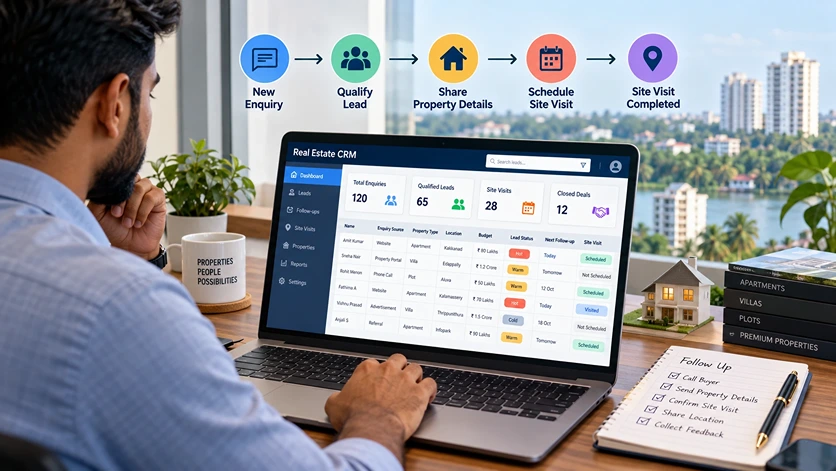
Real estate teams can use a spreadsheet or Customer Relationship Management (CRM) system to track buyer conversations, assigned agents, callback dates, and site visit status.
A basic lead tracker should include:
- Buyer name and enquiry source
- Preferred location and property type
- Budget and purchase timeline
- Current lead status
- Next agreed follow-up date
- Site visit status and feedback
Teams should also monitor the number of enquiries, qualified leads, confirmed appointments, and completed site visits.
For example, if an agency receives 100 enquiries and completes 20 site visits, its enquiry-to-site-visit rate is 20%.
This calculation is an illustrative example, not an actual Kerala real estate conversion benchmark.
Regular tracking helps agents identify missed enquiries, improve scheduling, and understand which follow-up activities are producing meaningful outcomes.
Common Real Estate Follow-Up Mistakes to Avoid
Even interested buyers may disengage when the follow-up process is poorly managed.
Delayed responses: Failing to contact buyers promptly can result in missed conversations.
Repeated calls: Excessive follow-ups without agreement can frustrate potential customers.
Irrelevant property suggestions: Recommending properties outside the buyer’s requirements wastes time.
Poor lead tracking: Missing conversation notes or callback dates makes follow-up inconsistent.
Unconfirmed site visits: Treating a suggested visit as a confirmed appointment creates scheduling problems.
Avoiding these mistakes can make the sales process more professional and efficient.
Frequently Asked Questions
Agents should respond as soon as practical during appropriate working hours. Prompt communication helps establish contact while the enquiry is still relevant.
Agents should understand buyer requirements, share suitable property information, answer important questions, and offer convenient viewing times. Confirm the appointment only after the buyer agrees.
Follow-up frequency depends on buyer interest, purchase timeline, and communication preferences. Avoid repeated contact when the buyer has not agreed to it.
Yes. WhatsApp can help agents share property details, brochures, locations, and appointment confirmations when the buyer has provided the necessary permission.
Lead tracking helps agents manage enquiries, remember buyer requirements, schedule callbacks, and monitor completed site visits. It also helps sales teams identify where improvements are needed.
A successful real estate lead follow-up process is not about making repeated sales calls. It is about understanding buyers, sharing relevant information, and helping them take the next step with confidence.
For real estate agents, brokers, and property sales teams in Kerala, a clear follow-up system can help reduce missed enquiries, improve communication, and make site visit scheduling more effective.
By responding promptly, qualifying leads, addressing buyer concerns, and confirming appointments properly, real estate professionals can turn more genuine enquiries into meaningful site visits.
The key is simple: every follow-up should provide value, build trust, and move interested buyers closer to the right property.
Turn More Property Enquiries Into Site Visits
Ready to improve your real estate lead follow-up process? Start by organising your enquiries, understanding buyer needs, and tracking every site visit. A simple, consistent approach can help your sales team reduce missed opportunities and convert more interested buyers into site visits.