“The leads are not good.”
This is one of the most common statements heard after a campaign generates enquiries but sales remain low.
The sales team says the campaign is attracting the wrong people. The marketing team points to the number of leads and the cost per result. Management is left trying to decide whether the problem is advertising, sales or the offer itself.
At Addox Digital, we have learned that “poor lead quality” is often used as a single explanation for several different problems.
Some leads are genuinely irrelevant. Others are suitable but contacted too late. Some are marked as unresponsive after one call. Some understand the advertisement differently from how the salesperson explains the offer. In other cases, the lead is qualified but the price, trust, timing or sales conversation prevents conversion.
These are not the same problem. They should not receive the same solution.
Increasing the advertising budget will not repair weak sales follow-up. Changing the targeting will not fix an unclear offer. Training the sales team will not make an ineligible enquiry suitable.
The first step is diagnosis.
Addox is a sales-focused digital marketing agency in Perinthalmanna. We analyse what happens from the first advertisement impression to the final sale, because lead volume alone does not explain business performance.
What Does “Poor Lead Quality” Actually Mean?
Before changing a campaign, the sales team must define what it means by a poor-quality lead.
Is the lead:
Outside the service area?
Ineligible for the course or service?
Looking for a job instead of buying?
Unable to afford the minimum price?
Planning to purchase much later?
Searching for a service the business does not provide?
Giving an incorrect phone number?
Not answering calls?
Interested but not ready to decide?
Qualified but choosing a competitor?
Only the first group of examples clearly indicates a fit or targeting problem. A suitable prospect who misses a call is not automatically a bad lead. A qualified person who delays the decision may need nurturing. A prospect who chooses a competitor may reveal a trust, offer or sales problem.
Without specific classifications, “poor lead quality” becomes an opinion rather than useful business data.
Why Sales Teams Naturally Blame the Leads
Salespeople experience the difficult part of the funnel directly. They make calls, hear objections, follow up and face rejection. When many people do not answer or purchase, the leads become the most visible problem.
But several factors can create the appearance of poor lead quality.
The campaign and sales team define a qualified lead differently
Marketing may consider anyone who submits a form a lead. Sales may consider only a person who is ready to purchase immediately a good lead.
Both definitions are incomplete.
A qualified lead should meet agreed criteria such as location, requirement, eligibility, budget range, decision authority and buying timeline. Marketing and sales must define these criteria before the campaign begins.
The team contacts enquiries after interest has dropped
A person may submit an enquiry while actively considering the offer. If the first response comes hours later, the person may have spoken with competitors or moved on.
The campaign produced interest, but the handover failed.
This is a response-time problem—not necessarily a lead-quality problem.
“No response” is recorded too early
One unanswered call is often enough for a lead to be marked as unreachable. But people miss calls because they are working, travelling or do not recognise the number.
Before classifying a lead as unresponsive, the business needs a minimum contact sequence using calls and contextual WhatsApp messages at different times.
The salesperson expects every enquiry to be sales-ready
A Meta lead, website enquiry, Google search lead and referral do not always enter with the same level of intent.
Some prospects need qualification. Others need proof, comparison or time. A lead can be relevant without being ready to pay during the first conversation.
This is why businesses need a structured sales funnel that moves enquiries towards customers, rather than expecting every form submission to convert immediately.
The Four Problems Hidden Behind Low Conversion
When leads are not converting, the cause usually falls into one or more of four areas.
1. Lead-generation problem
The campaign attracts people who do not match the actual customer profile.
Common signs include:
Wrong locations
Ineligible prospects
Job seekers or students entering a business campaign
Budgets far below the minimum requirement
Enquiries for unrelated services
Accidental form submissions
In this situation, marketing should review targeting, creative messaging, pricing clues, exclusions, landing-page clarity and qualification questions.
For Meta campaigns, Addox’s guide to getting high-intent leads instead of junk enquiries explains how the advertisement and form can filter prospects before they reach sales.
2. Sales-handling problem
The leads match the offer, but the team does not handle them consistently.
Common signs include:
Slow first response
Only one call attempt
Generic WhatsApp messages
Brochures sent without explanation
No discovery or qualification questions
No next follow-up date
Incomplete CRM notes
Leads closed without a specific reason
The campaign may be doing its job while revenue leaks during the sales handover.
3. Offer or trust problem
The right people are reached and contacted, but they do not see enough value or confidence to proceed.
Common signs include:
Qualified prospects repeatedly reject the price
Customers ask what makes the business different
Competitors are selected despite similar pricing
Prospects request proof, reviews or case studies
The sales team struggles to explain the outcome
The advertisement promises more than the offer delivers
This requires work on positioning, proof, pricing communication, guarantees, process clarity and objection handling.
4. Measurement problem
The business cannot connect campaigns with real sales outcomes.
Common signs include:
CRM records have no campaign source
Leads remain under broad or blank statuses
Sales are recorded separately from marketing data
The team reports only lead count and CPL
Lost reasons are unavailable
Management cannot calculate cost per qualified lead or sale
In this situation, the business may be blaming marketing or sales without enough evidence.
The Addox Lead-Quality Diagnosis Framework
Before changing the campaign, review the latest 50 to 100 enquiries using the same classification rules.
Step 1: Check whether each lead could genuinely buy
Review fit using criteria such as:
Correct location
Relevant requirement
Eligibility
Suitable budget range
Realistic timeline
Decision-making authority
If a high percentage fails these basic criteria, the campaign or offer communication needs improvement.
Step 2: Check how the team handled the enquiry
For every suitable lead, review:
Time taken for the first response
Number of contact attempts
Channels used
Quality of the first conversation
Information shared
Next follow-up date
Final status
If suitable leads are contacted late or abandoned early, changing the advertising audience will not solve the main problem.
Step 3: Identify the exact point of rejection
Do not use “not interested” as the default lost reason.
Record whether the lead was lost because of:
Price
Timing
Location
Eligibility
Missing feature
Lack of trust
Competitor selection
Decision-maker rejection
No urgency
Unreachable after the full contact sequence
Patterns make the real conversion problem visible.
Step 4: Compare outcomes by source
Do not combine every enquiry into one quality percentage.
Compare:
Campaign
Platform
Ad creative
Lead form or landing page
Location
Salesperson
Product or service
One campaign may produce fewer leads but more qualified conversations. Another may generate a low CPL but waste sales time.
Step 5: Choose the fix that matches the evidence
| Finding | Likely Problem | Priority Action |
|---|---|---|
| Many wrong-location or ineligible leads | Targeting or qualification | Improve messaging, targeting and form questions |
| Suitable leads contacted late | Sales handover | Set response-time ownership and alerts |
| High contact rate but low qualification | Campaign or offer mismatch | Review audience, promise and eligibility communication |
| Qualified leads reject pricing | Value or offer | Improve positioning, proof and price explanation |
| Proposals shared but few decisions | Follow-up or objection handling | Review sales conversations and next-action process |
| Sales happen but source is unknown | Tracking | Connect CRM stages and revenue to campaign sources |
Metrics That Settle the Marketing-versus-Sales Debate
Cost per lead cannot identify the real bottleneck alone.
Management should review:
Contact rate
What percentage of leads answered a call or replied to a message?
Qualification rate
What percentage matched the agreed customer criteria?
Appointment or next-step rate
How many qualified leads booked a consultation, demo, visit or proposal discussion?
Follow-up completion rate
How many scheduled follow-ups happened on time?
Lead-to-sale conversion rate
How many total and qualified leads became customers?
Cost per qualified lead and cost per sale
How much did the business spend to generate a genuine opportunity and an actual customer?
Lost-reason distribution
Why did suitable prospects decide not to proceed?
When these numbers are available by campaign and salesperson, discussions become more objective. Addox’s lead generation and sales support approach is built around connecting campaign performance with lead quality and sales outcomes.
What Marketing Must Own
Marketing should be responsible for:
Targeting relevant audiences
Communicating the offer accurately
Setting pricing or eligibility expectations where needed
Choosing the correct conversion path
Tracking the source of every enquiry
Reviewing lead quality by campaign
Using sales feedback to optimise targeting and messaging
Marketing should not defend a campaign only because it produced a low CPL.
What Sales Must Own
Sales should be responsible for:
Responding within the agreed time
Following the minimum contact sequence
Asking qualification questions
Recording useful CRM notes
Scheduling the next action
Handling objections consistently
Recording specific won and lost reasons
Sales should not reject leads using broad labels without evidence.
What Management Must Own
Management must ensure that marketing and sales use the same definitions, pipeline and business goals.
The review question should not be:
“Who is responsible for the poor result?”
It should be:
“At which stage are qualified opportunities being lost?”
That question leads to a fix instead of another internal argument.
The Addox Point of View
Not every lead complaint is wrong. Campaigns can attract irrelevant, low-intent or unqualified people. But not every failed sale proves that the lead was poor.
A lead can fail because of targeting, response speed, qualification, trust, price, follow-up, sales skill or measurement. Until the business separates these possibilities, it cannot improve consistently.
Our approach is to connect the complete journey:
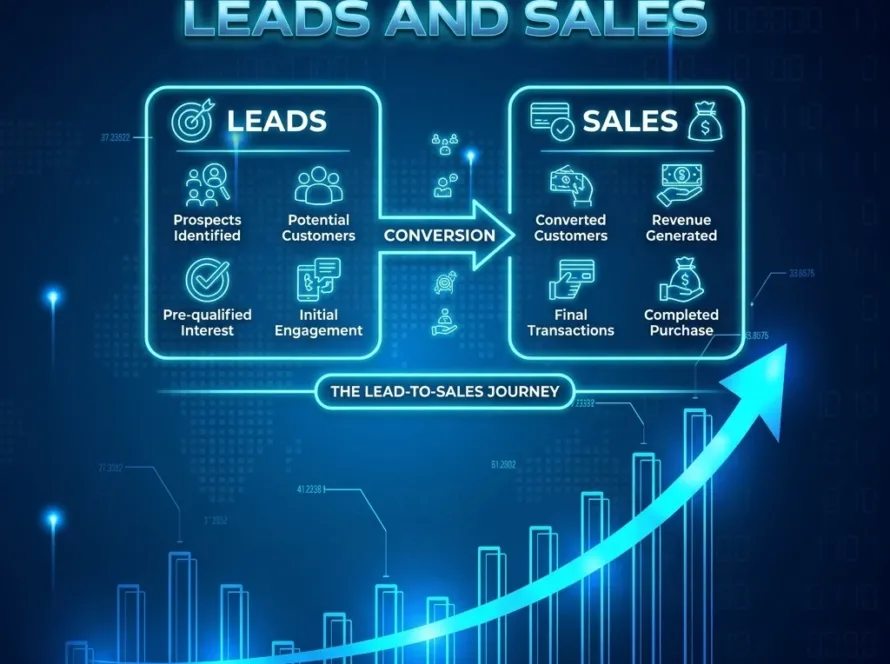
Campaign → Enquiry → Response → Qualification → Follow-Up → Decision → Revenue
This gives marketing better feedback, gives sales clearer priorities and gives management a more accurate view of growth.
Before increasing the budget or rebuilding the campaign, audit the enquiries already generated. The real conversion problem may be visible inside the CRM.
Frequently Asked Questions
Why are leads not converting into sales?
Leads may fail to convert because of poor targeting, weak qualification, delayed responses, an unclear offer, insufficient trust, inconsistent follow-up or missing sales tracking.
How can I determine whether lead quality is poor?
Define qualification criteria and review leads by location, requirement, eligibility, budget, timeline and decision authority. Compare these findings with response time and follow-up activity before blaming the campaign.
What is the difference between a bad lead and an unresponsive lead?
A bad lead does not match the business’s customer criteria. An unresponsive lead may still be suitable but has not answered after the complete contact sequence.
Should a business optimise for cost per lead?
CPL is useful, but it should be reviewed alongside contact rate, qualification rate, appointment rate, cost per qualified lead, conversion rate and cost per sale.
How should marketing and sales share responsibility?
Marketing should own audience and message quality. Sales should own response, qualification, follow-up and CRM updates. Both teams should review final sales outcomes together.