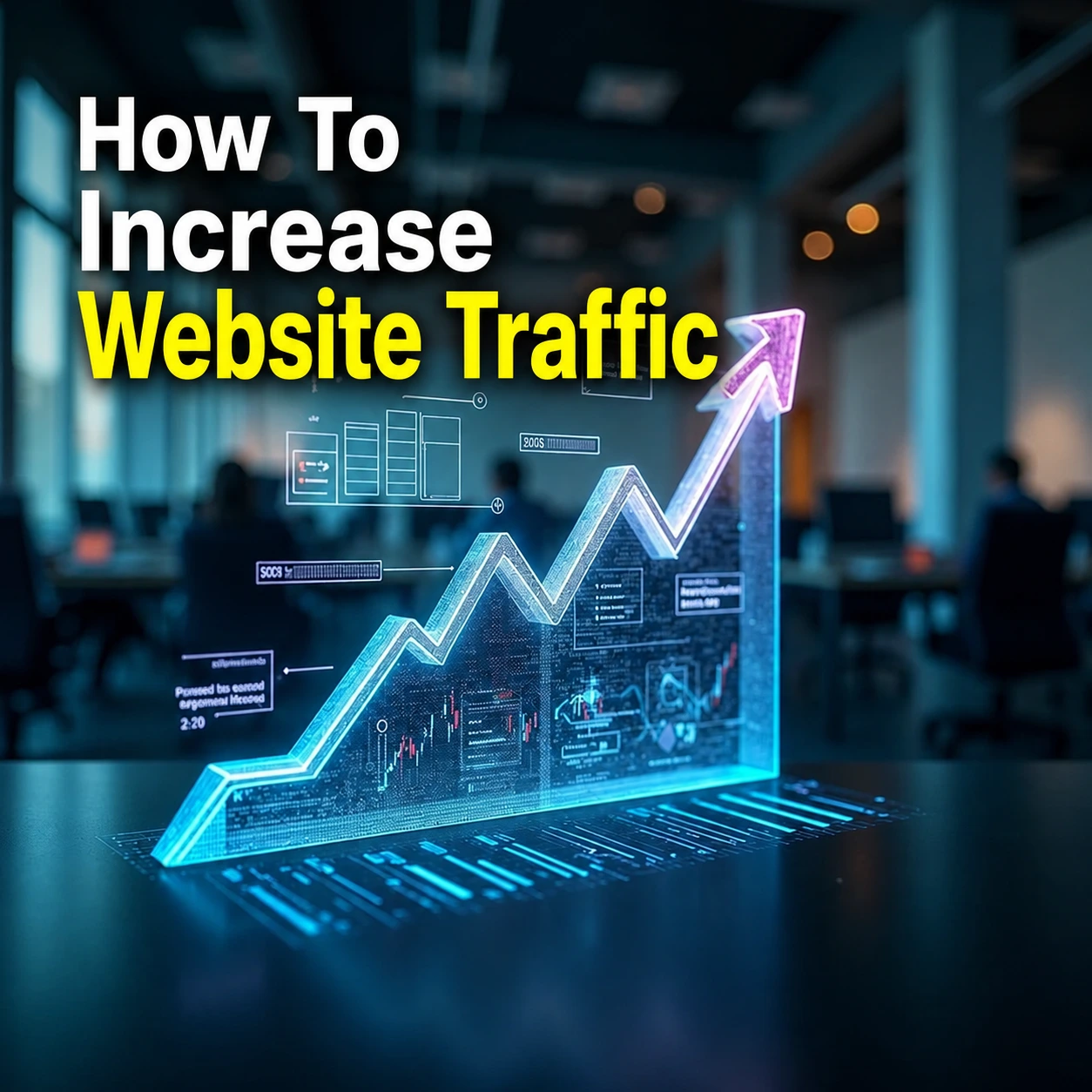
Increasing website traffic means bringing more visitors to your website using different digital marketing methods such as SEO, content creation, social media marketing, paid advertising, and backlink building. In simple terms, it is about making your website more visible so that more people can find it and visit it.
However, in real-world digital marketing, traffic is not just about increasing numbers. The real success comes when you attract the right audience who are genuinely interested in your business, content, or services. For example, a website with 1,000 random visitors may not generate results, but even 100 targeted visitors can lead to inquiries, sales, or meaningful engagement.
So increasing website traffic is not a single action. It is a combination of strategies that work together to improve visibility, attract users, and convert them into customers or readers.
Website traffic without targeting is useless because it does not generate conversions or engagement.
What is Website Traffic?
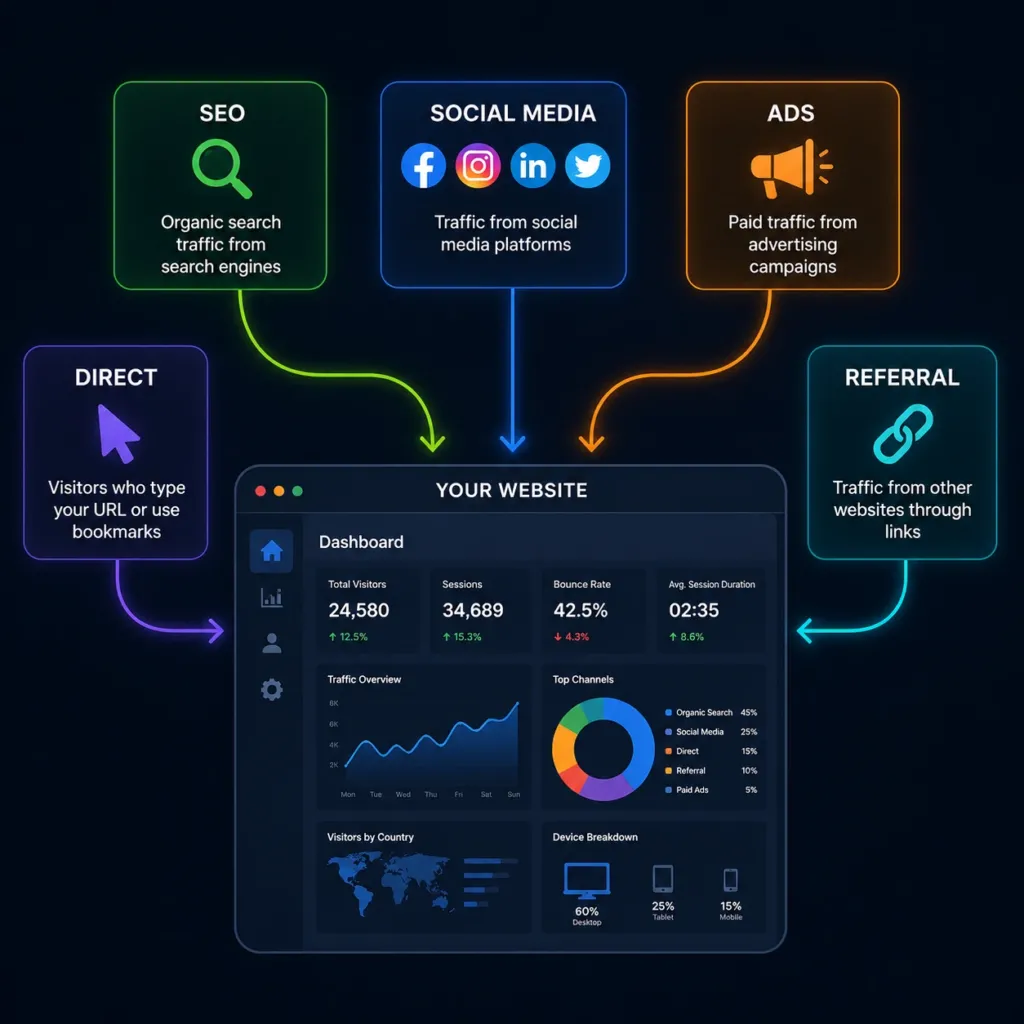
Website traffic refers to all the users who visit your website through different online channels such as search engines, social media platforms, direct visits, paid advertisements, or referral links from other websites.
Every visitor represents a potential interaction with your brand. They may read your content, explore your services, or take action like filling out a form or making a purchase.
Website traffic is also an important indicator of how well your online presence is performing. If traffic is increasing, it means your marketing strategies are working. If traffic is low, it usually indicates issues in SEO, content quality, or visibility.
In simple terms, website traffic shows how many people are discovering your website and how effectively your online presence is reaching your target audience.
Types of Website Traffic
Website traffic is divided into several types based on how users arrive at your website. Understanding these types is important because each one behaves differently and requires a different strategy.
Organic traffic is one of the most valuable types of traffic. It comes from search engines like Google when users search for something and click on your website. This type of traffic is powerful because users already have intent — they are actively looking for information, products, or services. However, organic traffic takes time to build because it depends heavily on SEO and content quality.
Paid traffic, on the other hand, comes from advertisements. When you run ads on platforms like Google Ads or Facebook Ads, your website appears in front of targeted users. The advantage of paid traffic is speed — you can get visitors almost instantly. However, the limitation is that traffic stops when your advertising budget stops.
Social media traffic comes from platforms like Instagram, Facebook, LinkedIn, or YouTube. This type of traffic is generated when users click on posts, videos, or shared links that lead to your website. Social media is very useful for building brand awareness and engagement, but its reach depends heavily on platform algorithms.
Direct traffic occurs when users type your website URL directly into the browser or open it from bookmarks. This usually happens when users are already familiar with your brand. It is a strong indicator of brand recognition and customer loyalty.
Referral traffic comes from other websites that link to your website. When users click those links, they are redirected to your site. This type of traffic not only brings visitors but also improves your SEO authority because search engines see backlinks as trust signals.
Organic traffic provides the highest long-term value because it generates consistent visitors without ongoing cost.
SEO and How It Increases Website Traffic
Search Engine Optimization (SEO) is the process of improving your website so that it ranks higher on search engines like Google. When your website appears on the first page of search results, it naturally receives more clicks and traffic.
SEO works through multiple layers. The first layer is keyword research, where you identify what people are searching for online. These keywords help you understand user intent and create content that matches their needs.
The second layer is on-page SEO, which involves optimizing your website content. This includes writing clear titles, structuring headings properly, using keywords naturally, and ensuring that content is easy to read and understand.
The third layer is technical SEO, which focuses on the performance of your website. This includes improving page loading speed, making your website mobile-friendly, and ensuring proper indexing by search engines.
The fourth layer is off-page SEO, which involves building backlinks from other websites. These backlinks act as trust signals, telling Google that your website is reliable and valuable.
SEO is one of the most powerful traffic sources because it provides long-term and consistent visitors without requiring continuous ad spending.
Website Traffic Sources Comparison
Types of Website Traffic
Traffic Type | Meaning | Benefit | Limitation |
Organic Traffic | Visitors from Google search results | Free, long-term, high intent users | Takes time to grow |
Paid Traffic | Visitors from ads like Google/Facebook Ads | Instant traffic, highly targeted | Stops when budget ends |
Social Traffic | Visitors from social media platforms | Good for brand awareness | Unstable reach |
Direct Traffic | Users typing website URL directly | Strong brand trust | Depends on brand strength |
Referral Traffic | Visitors from other websites | Improves SEO authority | Depends on external sites |
Organic traffic is the most sustainable source of website visitors, while paid traffic is the fastest but temporary.
Content Marketing and Traffic Growth
Content marketing is one of the most important methods for increasing website traffic. It involves creating valuable and informative content that attracts users to your website.
When you publish content such as blogs, guides, or tutorials, each piece becomes a new entry point for search engines. This means every article you publish has the potential to bring new visitors from Google.
Content works because it answers user questions and solves problems. When users find helpful information on your website, they are more likely to trust your brand and return in the future.
Over time, a strong content strategy builds authority, improves SEO rankings, and increases organic traffic consistently.
High-quality content increases both search rankings and user engagement simultaneously.
Social Media Marketing for Traffic
Social media platforms play a major role in increasing website traffic by helping you distribute your content to a larger audience. When you post content regularly on platforms like Instagram, Facebook, or LinkedIn, users can discover your website through shared links.
Social media also helps in building brand awareness because users become familiar with your business over time. However, social media traffic is often unpredictable because platform algorithms decide how many people see your content.
That is why social media works best when combined with SEO and content marketing, rather than being used alone.
Paid Advertising and Instant Traffic
Paid advertising is one of the fastest ways to increase website traffic. Through platforms like Google Ads and Facebook Ads, you can target specific audiences based on interests, location, and behavior.
This allows your website to appear in front of users who are most likely to click and engage.
The main advantage of paid ads is speed — you can start receiving traffic within hours. However, the major limitation is that traffic stops when the budget ends.
For this reason, paid ads are best used for short-term goals like promotions, product launches, or lead generation campaigns.
SEO vs Paid Ads Traffic Strategy
Table: SEO vs Paid Ads Comparison
Factor | SEO (Organic Traffic) | Paid Ads Traffic |
Speed | Slow (2–6 months) | Very fast (hours/days) |
Cost | Low (time investment) | High (continuous spending) |
Stability | Long-term and stable | Stops when budget stops |
Targeting | Based on keywords | Based on audience targeting |
Trust | High credibility | Depends on ad quality |
SEO builds long-term traffic authority, while paid ads deliver immediate but temporary website visitors.
Backlinks and Website Authority
Backlinks are links from other websites that point to your website. They are extremely important for SEO because search engines treat them as signals of trust and authority.
When reputable websites link to your content, it tells Google that your website is valuable and reliable. This improves your rankings and increases organic traffic.
Backlinks can be created through guest blogging, collaborations, directory listings, or public relations activities.
Website Optimization and User Experience
Even if your website receives high traffic, it will not be effective if users leave immediately. This is why website optimization is important.
A well-optimized website loads quickly, works smoothly on mobile devices, and provides clear navigation so users can easily find what they are looking for.
Good user experience increases engagement, reduces bounce rate, and improves conversion rates.
Analytics and Performance Tracking
Tracking your website traffic is essential for understanding what is working and what is not. Tools like Google Analytics help you analyze user behavior, traffic sources, and performance metrics.
By studying this data, you can make better decisions about your content, SEO strategy, and marketing efforts.
Without tracking, it becomes impossible to improve your traffic effectively because you are essentially working without feedback.
Without analytics, website traffic improvement becomes guesswork instead of strategy.
FAQ
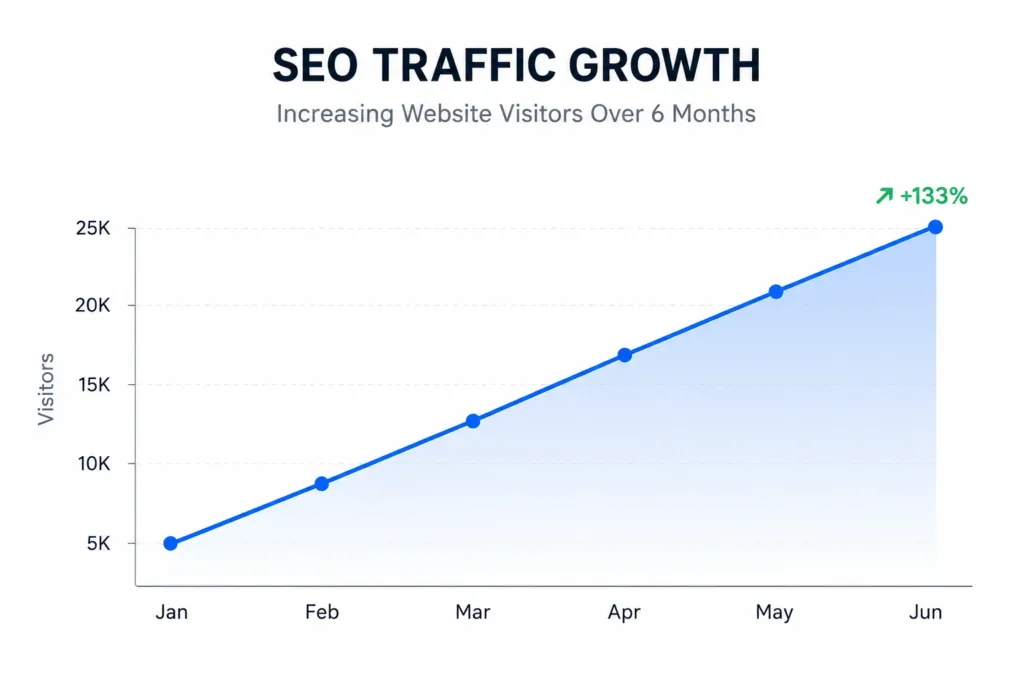
Increasing website traffic depends on the strategy used. SEO usually takes 2 to 6 months to show strong results because it builds gradually over time. Paid advertising, however, can bring traffic within hours, but it requires continuous investment. For sustainable growth, a combination of SEO and content marketing is recommended.
The fastest way to increase website traffic is through paid advertising such as Google Ads or social media ads. These platforms allow you to target specific audiences and get instant visibility. However, this method is not long-term because traffic stops when the ads stop running.
Yes, it is completely possible to increase website traffic without using ads. You can achieve this through SEO, content marketing, and social media strategies. These methods take more time but provide long-lasting and stable traffic growth.
A website may not get traffic due to several reasons such as poor SEO, lack of keyword optimization, low-quality content, absence of backlinks, or technical issues like slow loading speed. Fixing these areas usually improves visibility and traffic.
Organic traffic from search engines like Google is considered the best long-term traffic source because it is free, consistent, and highly targeted. It continues to bring visitors even without ongoing spending.
Increasing website traffic requires a combination of multiple strategies working together. SEO builds long-term visibility, content marketing creates continuous entry points, social media increases reach, paid ads bring instant traffic, backlinks improve authority, and website optimization ensures users stay longer.
When all these elements are combined and applied consistently, website traffic grows steadily and sustainably over time.