The difference between leads and sales in digital marketing is one of the most misunderstood parts of online business growth.
Many businesses say:
“We are getting leads, but sales are still low.”
That usually means the marketing is generating attention, but the business does not yet have a strong conversion system.
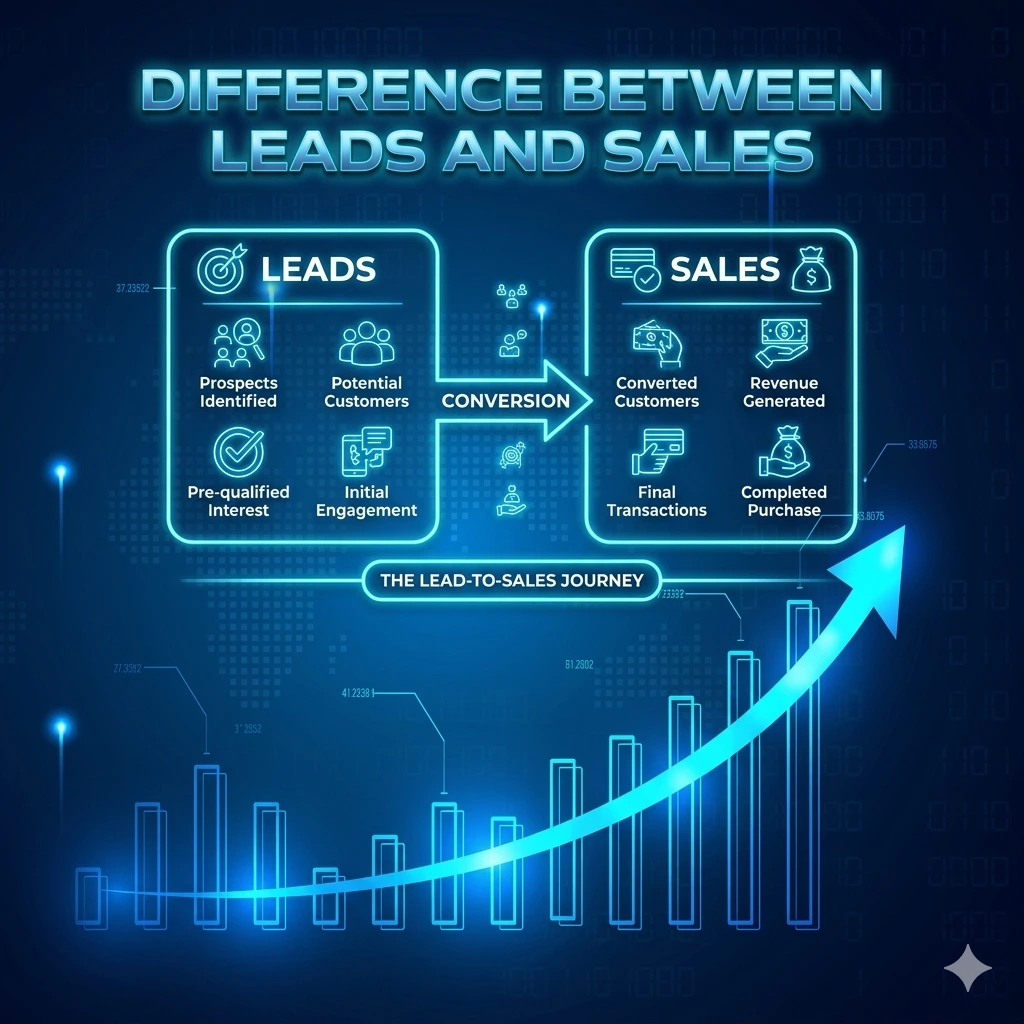
A lead is someone interested in your business.
A sale happens only when that person:
trusts your business
understands your offer
feels confident enough to buy
completes payment
This is why businesses using structured lead generation services focus not only on lead quantity, but also on:
lead quality
follow-up systems
conversion optimization
CRM workflows
remarketing
customer nurturing
Most businesses do not fail because of low leads. They fail because of weak conversion systems.
Why Businesses Confuse Leads and Sales
High lead volume without conversion systems creates misleading marketing success.
This is a common situation:
A business gets:
800 Meta leads
200 WhatsApp inquiries
thousands of website visitors
But revenue barely changes.
Why?
Because leads are not customers.
A lead only shows interest.
A sale creates revenue.
Many businesses expect digital marketing campaigns to create instant customers. But online marketing usually works in stages:
attention
interest
inquiry
trust-building
follow-up
conversion
If even one stage fails, sales drop.
Related reading:
Local Detail
Many Kerala businesses still manage leads manually using personal WhatsApp numbers. This creates delayed responses and poor conversion tracking.
Unpopular Truth
Most businesses asking for “more leads” actually need better lead handling systems.
What Are Leads and Sales in Digital Marketing?
Leads create opportunity while sales create measurable business growth.
Term | Meaning | Example | Business Impact | Date |
Lead | Potential customer interest | Form inquiry | Creates opportunity | 2026 |
Sale | Completed transaction | Paid service | Generates revenue | 2026 |
What Is a Lead?
A lead is a person who shows interest in your business.
Examples include:
filling a website form
sending a WhatsApp inquiry
downloading a brochure
booking a consultation
calling your office
responding to ads
But a lead does not mean the person is ready to buy.
Businesses working with a digital marketing agency in Kerala often discover that large lead volume means nothing without proper qualification.
What Is a Sale?
A sale happens when:
-
payment is completed
-
a service is booked
-
a product is purchased
-
a contract is signed
Sales directly affect:
-
revenue
-
profitability
-
business sustainability
-
marketing ROI
Lead vs Prospect vs Customer
Every customer starts as a lead, but most leads never become customers.
Stage | Meaning | Intent Level | Example | Date |
Lead | Shows basic interest | Low–Medium | Website inquiry | 2026 |
Prospect | Considering purchase | Medium–High | Asking pricing | 2026 |
Customer | Completed payment | High | Purchased service | 2026 |
Why This Matters
Most businesses treat all leads equally.
That is a mistake.
Someone asking:
“Can we schedule a consultation?”
has much higher buying intent than someone casually liking an Instagram post.
This is why lead qualification matters.
Why Some Leads Never Become Sales
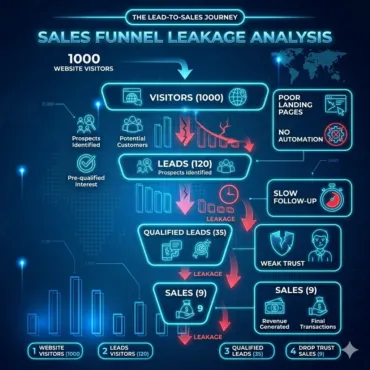
Poor follow-up destroys more sales than poor advertising.
Many businesses think:
“Our ads are not working.”
But often the real problem is:
slow response time
weak communication
poor website experience
lack of trust
bad targeting
no nurturing system
Related reading:
Field Note
During campaigns for Kerala service businesses, faster follow-up systems consistently improved conversion rates more than increasing ad budgets.
Unpopular Truth
Many businesses lose leads within the first 15–30 minutes because replies are too slow.
Lead Quantity vs Lead Quality
Fewer high-intent leads usually outperform large numbers of low-quality leads.
Strategy | Result | Risk | Date |
High Lead Quantity | More inquiries | Weak conversion | 2026 |
High Lead Quality | Better revenue | Lower volume | 2026 |
Example
A business may generate:
1000 cheap Meta leads
OR
120 highly targeted SEO leads
The SEO leads may generate:
higher trust
better conversions
stronger ROI
Trade-Off
Cheap leads reduce CPL (Cost Per Lead), but often increase wasted sales effort.
CPL vs CAC vs ROI
Low lead cost does not always mean profitable marketing.
Many businesses focus only on:
cheap leads
low ad spend
high inquiry volume
But profitable marketing depends on:
conversion rates
customer value
retention
revenue quality
Important Metrics
|
Metric |
Meaning |
Why It Matters |
Date |
|
CPL |
Cost Per Lead |
Measures inquiry cost |
2026 |
|
CAC |
Customer Acquisition Cost |
Measures customer cost |
2026 |
|
ROI |
Return on Investment |
Measures profitability |
2026 |
Example Scenario
|
Campaign |
CPL |
Sales Conversion |
Profitability |
|
Cheap Meta Leads |
₹120 |
1% |
Weak |
|
SEO Leads |
₹650 |
9% |
Strong |
Unpopular Truth
The cheapest leads are often the most expensive to convert.
SEO Leads vs Meta Leads vs Google Ads Leads
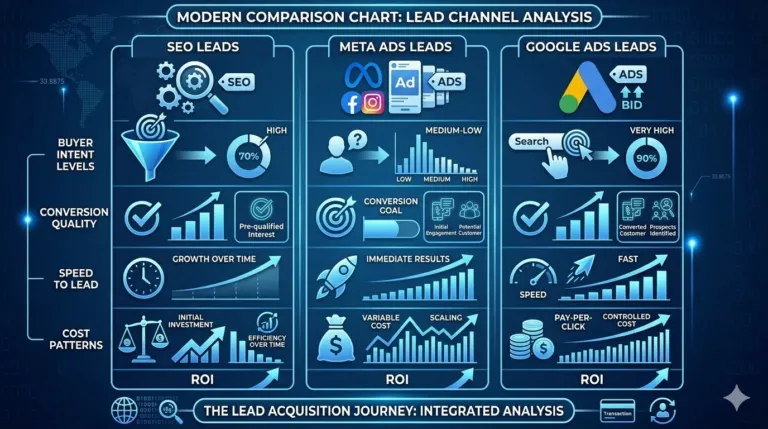
Different traffic sources create different levels of buyer intent.
Source | Lead Quality | Buyer Intent | Speed | Cost Pattern |
SEO | High | High | Slow | Long-term |
Google Ads | Medium–High | High | Fast | Paid |
Meta Ads | Medium | Medium | Fast | Paid |
Organic Social | Low–Medium | Low | Slow | Low cost |
Why SEO Leads Usually Convert Better
SEO users actively search for solutions.
For example:
Someone searching:
“best lead generation company in Kerala”
already has stronger buying intent.
Related reading:
Why Meta Leads Often Fail
Meta leads fail when:
targeting is broad
qualification is weak
follow-up is slow
landing pages are poor
Related reading:
B2B vs B2C Lead Differences
B2B leads usually require longer trust-building than B2C leads.
Business Type | Buying Cycle | Lead Volume | Trust Requirement |
B2B Services | Long | Lower | Very High |
Ecommerce | Short | Higher | Medium |
Healthcare | Medium | Medium | High |
Education | Medium–Long | High | High |
Why This Matters
A business selling:
- consulting services
- SEO retainers
- web development
- enterprise marketing
cannot expect instant conversions like ecommerce stores.
Related reading:
Lead Nurturing and Follow-Up Systems
Most sales happen after multiple follow-ups, not after the first interaction.
Lead nurturing means:
- educating leads
- building trust
- staying visible
- guiding decisions
This includes:
- WhatsApp follow-ups
- email sequences
- remarketing ads
- consultation calls
- testimonials
- case studies
Related reading:
Local Detail
Many Kerala educational institutes now automate WhatsApp follow-up because manual systems fail during peak admission periods.
CRM and WhatsApp Automation
CRM systems improve follow-up consistency and conversion tracking.
CRM systems help businesses:
track inquiries
assign sales teams
monitor conversion stages
automate communication
reduce missed opportunities
Many businesses now use:
Important Insight
Businesses often think automation reduces personalization.
But good automation actually improves response consistency and customer experience.
Attribution Problems in Digital Marketing
The final click does not always deserve full credit for the sale. Many businesses misunderstand attribution.
Example:
- User discovers business through Instagram
- Later searches on Google
- Visits website through SEO
- Finally converts through WhatsApp
Which channel created the sale?
The answer:
All of them contributed.
This is why businesses should avoid judging campaigns only by:
- last-click sales
- direct conversions
- immediate ROI
Why Businesses Need Sales Funnels
Funnels turn random traffic into predictable business growth.
Without funnels:
leads get ignored
conversions become inconsistent
marketing performance becomes unpredictable
A funnel includes:
awareness
lead generation
qualification
nurturing
conversion
retention
Related reading:
- Sales Funnel Strategy for Service Businesses
- The Marketing Operating System Every Growing Business Needs
Common Mistakes Red Flags
Biggest Mistakes Businesses Make
Most businesses track leads but fail to track conversions properly.
Common mistakes:
counting all leads equally
focusing only on CPL
ignoring follow-up speed
weak landing pages
no CRM systems
no remarketing
expecting instant SEO sales
Related reading:
Red Flags
high inquiries but weak sales
no qualification systems
no remarketing
slow responses
weak conversion tracking
Case Study Field Note
Kerala Coaching Institute Example
Better lead qualification improves revenue more than increasing lead quantity.
A coaching institute in Kerala generated more than 1200 Meta leads within two months.
But sales remained low.
Problems:
low-quality inquiries
slow follow-up
no filtering process
manual WhatsApp handling
Solutions implemented:
qualification questions
automated WhatsApp replies
remarketing ads
faster callbacks
landing page improvements
Results:
lower lead volume
higher conversion rates
better student quality
improved ROI
Related examples:
Unpopular Truth
More leads do not always create better business growth.
Actionable Checklist Framework
Checklist 1: Improve Lead Quality
Better targeting improves conversion quality faster than increasing ad budgets.
Do this now:
Step 1: Add qualification questions
Step 2: Track source-wise conversions
Step 3: Remove weak targeting
Step 4: Monitor lead-to-sale ratios
Proof you keep:
CRM reports
conversion dashboard
sales tracking sheet
Checklist 2: Improve Sales Conversion
Faster communication increases conversion probability significantly.
Do this now:
- Step 1: Respond within 15 minutes
- Step 2: Add WhatsApp automation
- Step 3: Improve landing page trust signals
- Step 4: Run remarketing campaigns
Proof you keep:
- CRM tracking
- retargeting reports
- call logs
FAQs
No. Leads show interest while sales generate actual revenue.
Usually because of weak follow-up systems, low trust, poor targeting, or poor customer experience.
SEO usually generates higher-intent leads, while Meta ads generate faster but broader traffic.
Most customers need multiple interactions before buying. Nurturing builds trust over time.
A qualified lead is someone more likely to purchase based on budget, intent, or buying readiness.