You’re Not a Beginner Anymore. But You’re Not Scaling Either.
Your business has already grown.
Ads are running
Team exists
Sales happen
Leads come… sometimes
But growth feels unpredictable.
One month works.
Next month drops.
New agency joins. Energy high.
90 days later — same story.
This is the exact phase where most businesses get stuck.
Not because marketing isn’t happening.
But because marketing doesn’t have a system.
Marketing Activity vs Marketing System
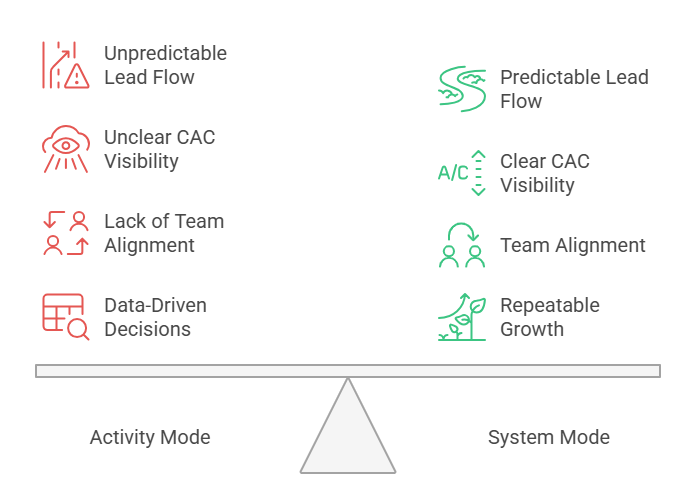
Most mid-stage companies confuse doing marketing with having a marketing engine.
Activity Mode:
Running ads
Posting content
Hiring agencies
Trying new funnels
Changing creatives constantly
System Mode:
Predictable lead flow
Clear CAC visibility
Team alignment
Data-driven decisions
Repeatable growth
Growth doesn’t come from activity.
Growth comes from structure.
What Is a Marketing Operating System?
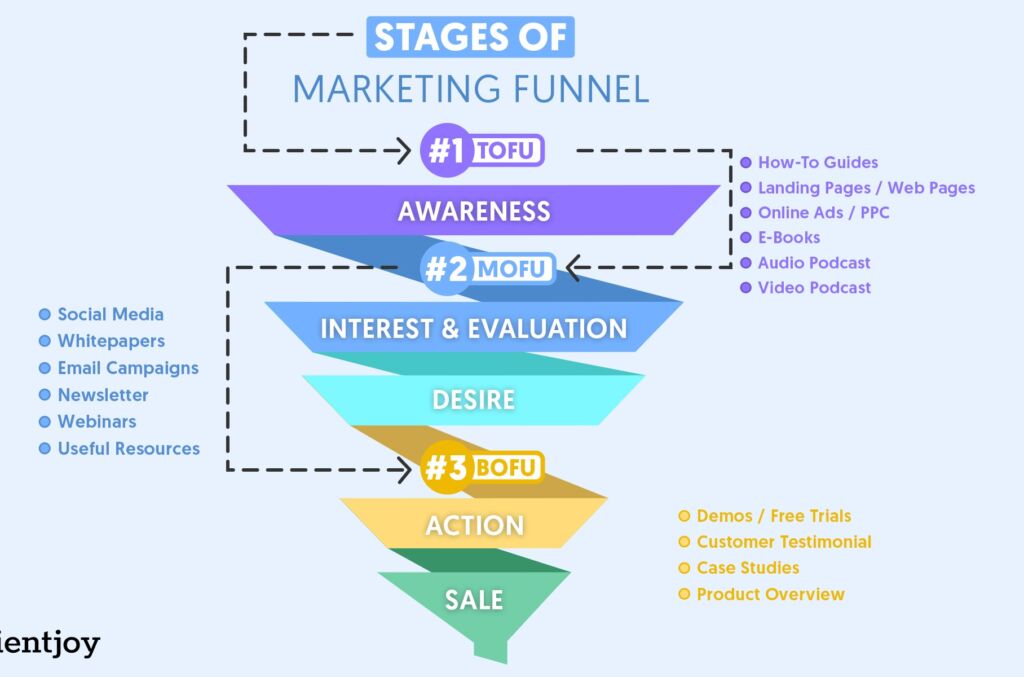
A Marketing Operating System (MOS) is the structure that connects:
Strategy
Ads
Content
Sales
Data
Conversion
…into one synchronized growth machine.
It removes chaos and replaces it with rhythm.
Not “try this campaign.”
But “run this engine.”
Why Growing Businesses Need This Now
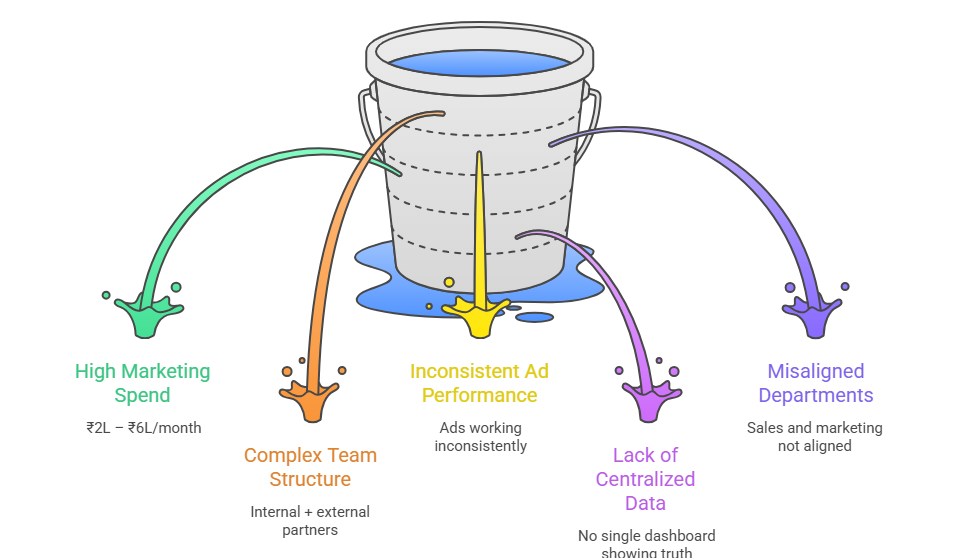
This stage usually looks like this:
₹2L – ₹6L marketing spend/month
Internal team + external partners
Ads working, but inconsistently
No single dashboard showing truth
Sales and marketing not aligned
And the biggest pain:
“We’re spending. We’re visible. But we’re not scaling.”
This is not an ad problem.
Not a creative problem.
Not even a team problem.
It’s a system problem.
The 5 Layers of a Marketing Operating System
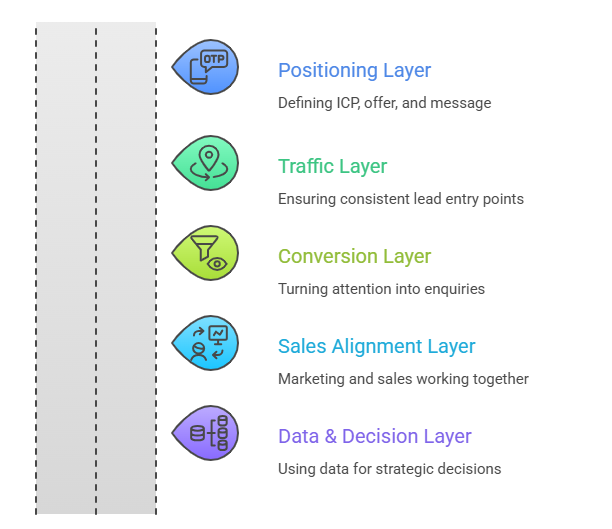
1) Positioning Layer
Clear ICP + Offer + Message
Without this:
Ads confuse audience
Sales pitch varies
Content lacks direction
With this:
Same message everywhere
Audience clarity
Faster conversion
2) Traffic Layer
Predictable lead entry points
Includes:
Meta ads
Google search
Content discovery
Referral loops
Goal:
Not traffic spikes.
Traffic consistency.
3) Conversion Layer
Turning attention into enquiries
Includes:
Landing pages
WhatsApp flows
Lead forms
Offer structure
Most businesses leak growth here.
4) Sales Alignment Layer
Marketing + sales working together
Common problem:
Marketing blames sales
Sales blames leads
System approach:
Lead scoring
CRM tracking
Feedback loops
Result:
Better close rate without increasing ad spend.
5) Data & Decision Layer
The most ignored — and most powerful.
Every growing business needs:
CAC visibility
Channel performance clarity
Lead-to-sale ratio
Campaign ROI
Funnel drop-off points
If you cannot see numbers, you cannot scale.
Campaigns Create Spikes. Systems Create Scale.
Campaign thinking:
“Let’s try this creative.”
System thinking:
“Let’s strengthen the conversion engine.”
Campaign thinking:
“Run ads this month.”
System thinking:
“Build a pipeline that runs all year.”
Campaign thinking is temporary.
System thinking compounds.
Signs You Need a Marketing Operating System
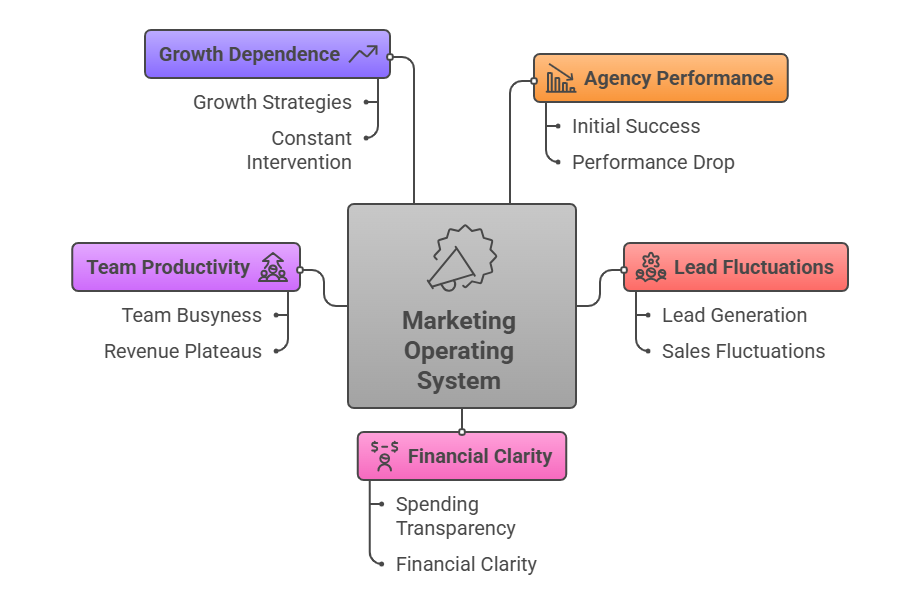
Agencies work initially, then performance drops
Leads come, but sales fluctuate
No clarity where money is going
Team is busy, but revenue plateaus
Growth depends on constant intervention
If this feels familiar — you’re ready for system-level marketing.
What Happens When Structure Enters
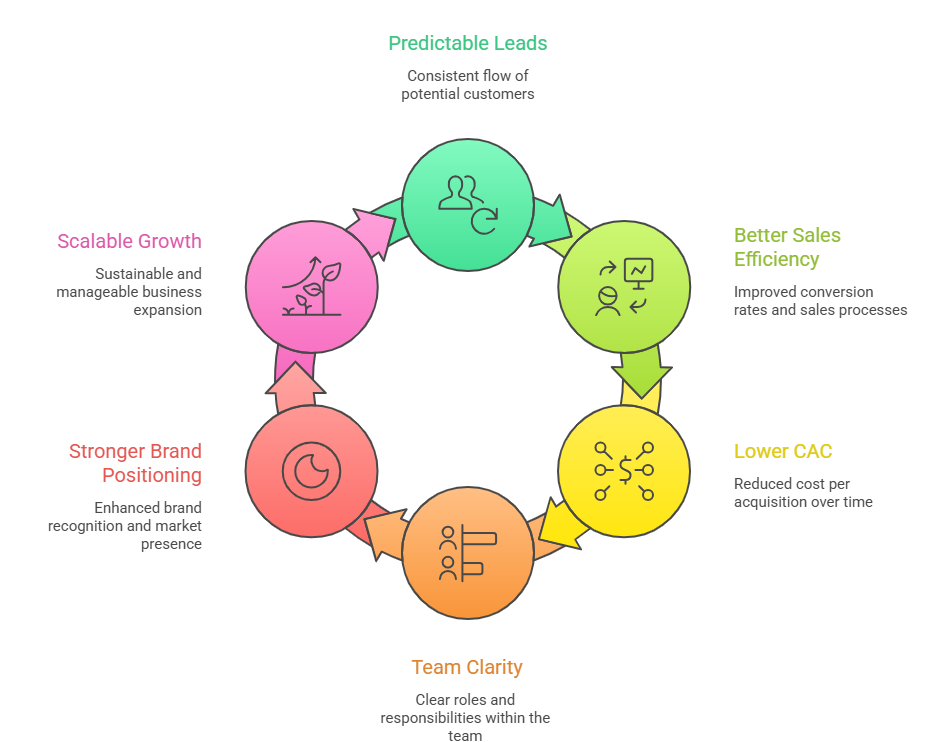
Businesses experience:
Predictable leads
Better sales efficiency
Lower CAC over time
Team clarity
Stronger brand positioning
Scalable growth rhythm
Marketing stops feeling like chaos.
It starts behaving like an infrastructure.
The Biggest Mindset Shift
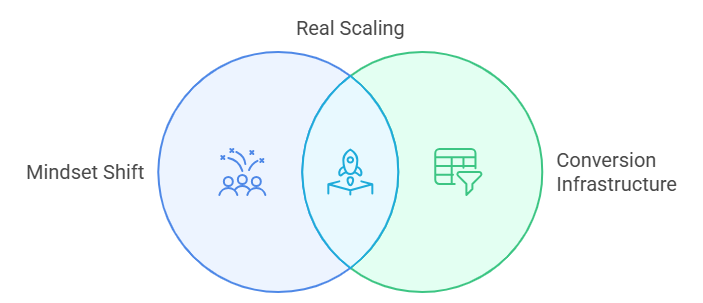
You don’t need:
More creatives
More ads
More agencies
You need:
Alignment
Dashboard visibility
Conversion infrastructure
Pipeline thinking
System ownership
This is where real scaling begins.
From “Marketing Expense” to “Growth Engine”
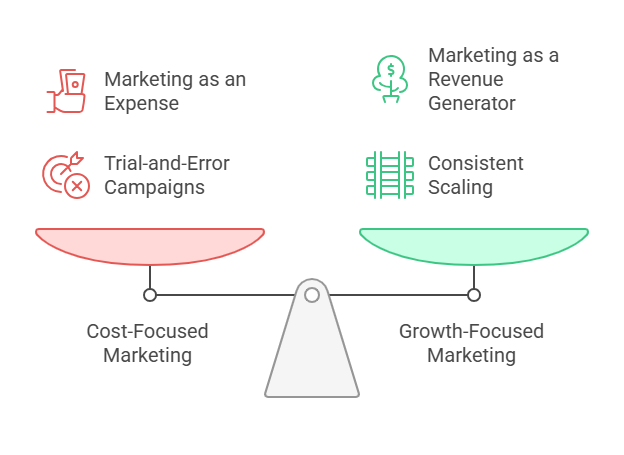
When a Marketing Operating System is in place:
Marketing stops being a cost.
It becomes a predictable revenue generator.
That’s the difference between:
Businesses that try campaigns…
and businesses that scale consistently.
You’ve already crossed the beginner stage.
Now the question is not:
“Which campaign should we run next?”
The real question is:
“Do we have a system strong enough to support scale?”
Because growth is not random.
Growth is engineered.
If your business is stuck between effort and scale,
it’s time to shift from campaign-driven marketing to system-driven growth.
Build the structure.
The growth will follow.
FaQ
1) Why do mid-stage businesses struggle with marketing growth?
Most growing businesses run campaigns without a clear system. This leads to inconsistent leads, unclear ROI, team misalignment, and difficulty scaling. A structured marketing process solves this problem.
2) When should a business build a marketing operating system?
A business should implement a marketing system when:
Marketing spend crosses ₹1–2 lakh/month
Leads are inconsistent
Sales and marketing are not aligned
Growth becomes unpredictable
This stage requires structure, not experimentation.
3) How does a marketing system improve lead generation?
It creates predictable lead pipelines by combining:
Consistent traffic sources
Optimized landing pages
Clear messaging
Conversion tracking
This improves both lead quality and volume.
4) What metrics should be tracked in a marketing operating system?
Key metrics include:
Cost per lead (CPL)
Customer acquisition cost (CAC)
Conversion rate
Lead-to-sale ratio
Return on ad spend (ROAS)
Pipeline value
These help businesses make data-driven decisions.