Most businesses don’t fail at marketing because of poor effort.
They fail because their marketing has no system.
Ads are running. Content is posted. Designers are working. Budgets are spent.
But leads are inconsistent. Sales fluctuate. Growth feels random.
This creates a dangerous illusion: “Marketing isn’t working.”
The truth is different — marketing without a structured engine cannot scale.
This blog explains why random marketing activities break growth and how a structured growth system turns scattered efforts into predictable results.
The Real Problem: Random Marketing ≠ Growth
Many businesses operate in “activity mode,” not “system mode.”
They do:
- Occasional social media posts
- Random Google or Meta ads
- Blogs without strategy
- Design-heavy branding without lead focus
- Offers launched without audience understanding
Each of these may work temporarily. But they don’t connect.
Result:
- Traffic comes, but leads don’t convert
- Leads come, but sales don’t sustain
- Sales happen, but repeat business is missing
Marketing starts feeling like trial-and-error instead of a predictable engine.
Why Random Ads and Content Don’t Scale
1) No audience clarity
Ads run without deep understanding of:
- Who the ideal customer is
- What problem they are trying to solve
- Where they are in the buying journey
Without this, messaging becomes generic — and generic messaging never scales.
2) No funnel structure
Most businesses run ads directly to:
- Contact page
- Landing page without qualification
There’s no:
Awareness → Interest → Trust → Conversion → Retention flow.
Without this journey, even good traffic doesn’t turn into sales.
3) Content without intent
Posting for “visibility” alone rarely creates growth.
Content must be built for:
- Problem awareness
- Solution education
- Authority building
- Trust formation
Random posts create noise. Strategic content builds momentum.
4) No data feedback loop
If you’re not tracking:
- Lead quality
- Conversion rates
- Drop-off points
- Customer acquisition cost
You’re not improving marketing — you’re repeating it blindly.
The Shift: From Campaigns to Systems
Growth happens when marketing becomes a system, not a set of tasks.
A marketing system means:
- Every ad has a purpose
- Every content piece supports a funnel stage
- Every lead enters a follow-up process
- Every campaign feeds data into the next decision
Instead of “posting and hoping,” you build a structured engine.
What a Structured Growth Engine Looks Like
1) Clear Customer Persona Foundation
Growth starts with clarity.
You must know:
- Who buys from you
- Why they buy
- What stops them
- What builds trust
Without persona clarity, marketing remains guesswork.
2) Problem-Driven Messaging
People don’t buy services. They buy solutions to pain.
Your messaging must answer:
- What is the real problem?
- Why is it urgent?
- What happens if ignored?
- Why you are the right solution?
This transforms marketing from promotional to persuasive.
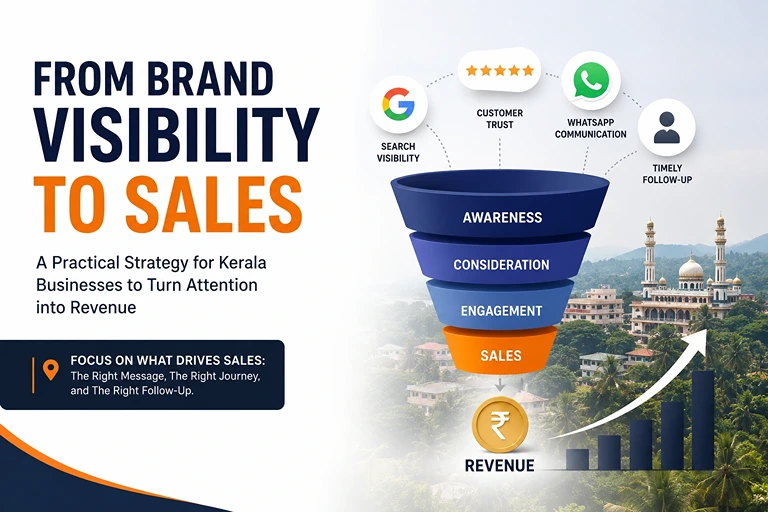
3) Funnel Architecture
A system connects stages:
Stage 1 – Awareness
Educational content, problem-focused ads
Stage 2 – Consideration
Case studies, comparisons, trust signals
Stage 3 – Conversion
Offers, consultations, demo, lead magnets
Stage 4 – Nurture
Email, WhatsApp follow-ups, retargeting
Stage 5 – Retention
Repeat sales, referrals, loyalty
This is where marketing starts scaling.
4) Consistent Lead Capture Mechanism
Leads shouldn’t depend on “when ads run.”
A system ensures:
- Website captures leads
- Landing pages convert traffic
- Social content directs to offers
- CRM tracks interactions
Marketing becomes a machine, not an event.
5) Follow-Up Infrastructure
Most sales are lost not because of bad leads — but poor follow-up.
A system includes:
- Automated WhatsApp sequences
- Email nurturing
- Sales scripts
- Reminder flows
This increases conversion without increasing ad spend.
6) Data-Driven Optimization
Every campaign should answer:
- Which ad brought best leads?
- Which content converted most?
- Where did users drop off?
- Which audience generated ROI?
Systems learn. Random marketing repeats.
The Biggest Myth: “We Need Better Ads”
Businesses often think growth comes from:
- New creatives
- Bigger budgets
- Viral content
But scale comes from:
- Better structure
- Clear positioning
- Repeatable processes
Good ads inside a bad system fail.
Average ads inside a strong system succeed.
Signs Your Marketing Is Missing a System
You’re likely running random marketing if:
- Leads fluctuate every month
- Sales depend on ad budget spikes
- Content is posted without strategy
- No defined funnel exists
- You rely heavily on manual follow-ups
- No clarity on ROI
This doesn’t mean your marketing is failing.
It means it hasn’t been structured yet.
The Compounding Effect of Systems
When marketing becomes systematic:
- Content builds authority over time
- Ads become more efficient
- Lead quality improves
- Conversion rates rise
- Cost per acquisition drops
- Brand trust grows
Growth stops being “effort-based” and becomes “process-based.”
This is how businesses move from survival marketing to scalable marketing.
Building the System: Where to Start
You don’t need to rebuild everything at once.
Start with these steps:
- Define your primary customer persona
- Map the buying journey
- Build a simple funnel
- Create problem-focused content
- Add structured follow-up
- Track every stage
Once the structure exists, scale becomes easier.
Final Thought
Marketing isn’t supposed to feel chaotic.
If you’re constantly:
- Testing
- Changing
- Restarting
- Spending without clarity
It’s not a marketing failure.
It’s a system gap.
Random marketing creates temporary results.
Structured marketing creates predictable growth.
Your marketing isn’t broken.
It just needs a system that connects effort to outcome — and activity to revenue.